
What causes food insecurity in Austin?
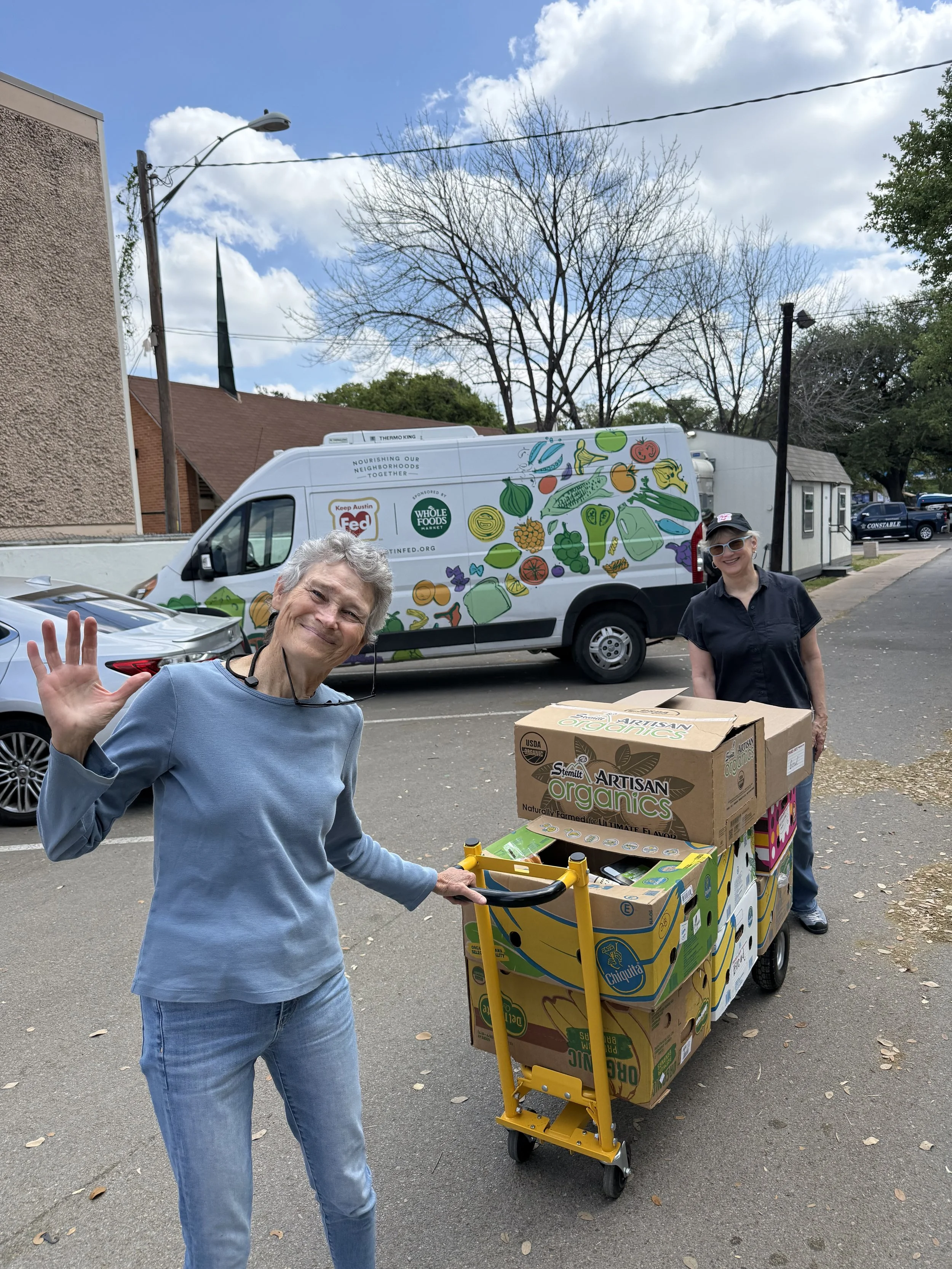
Keep Austin Fed volunteers bring fresh food to the community.
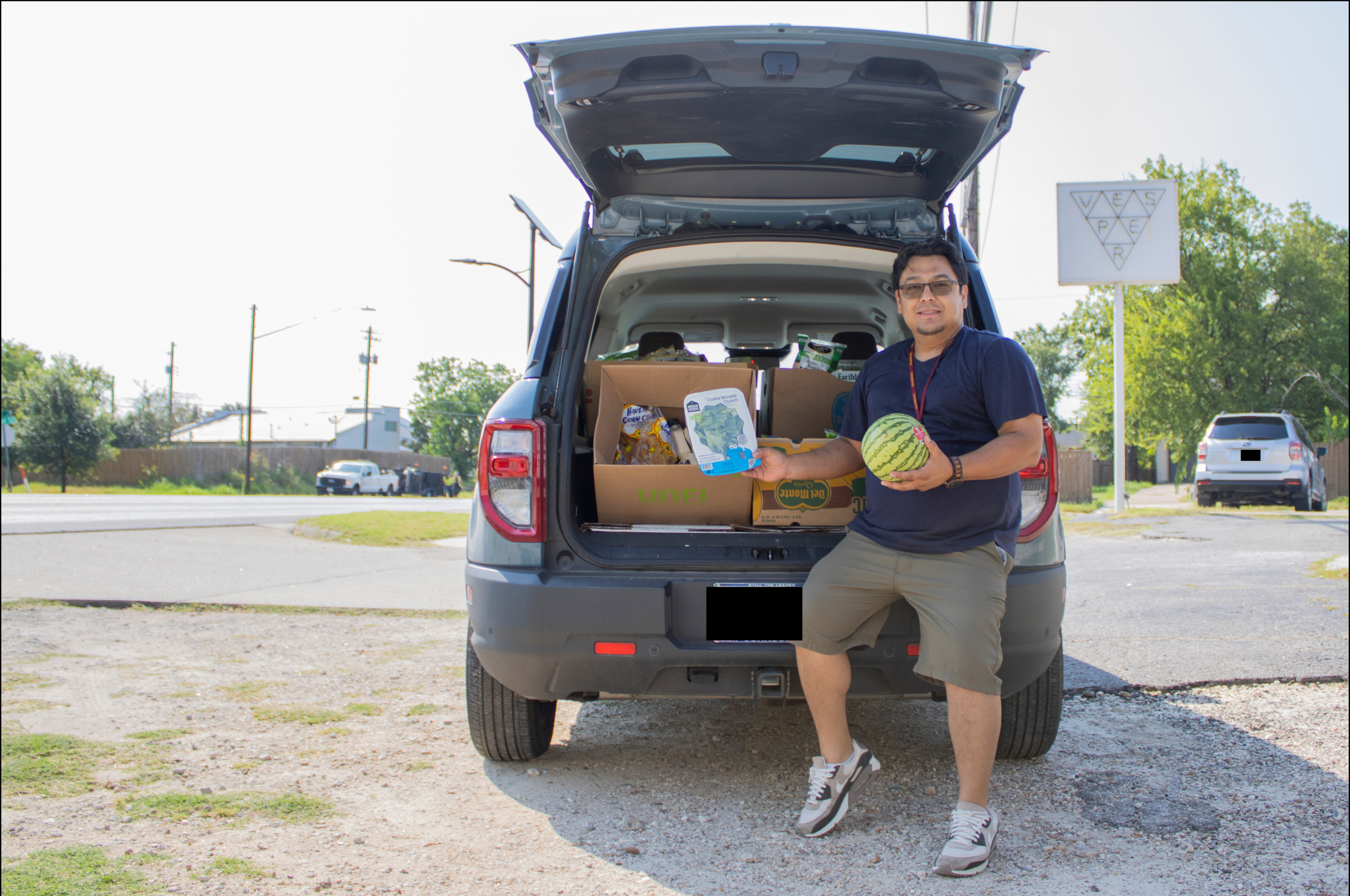
August 2025- Keep Austin Fed volunteer Ric Arredondo fills his car with donated food.
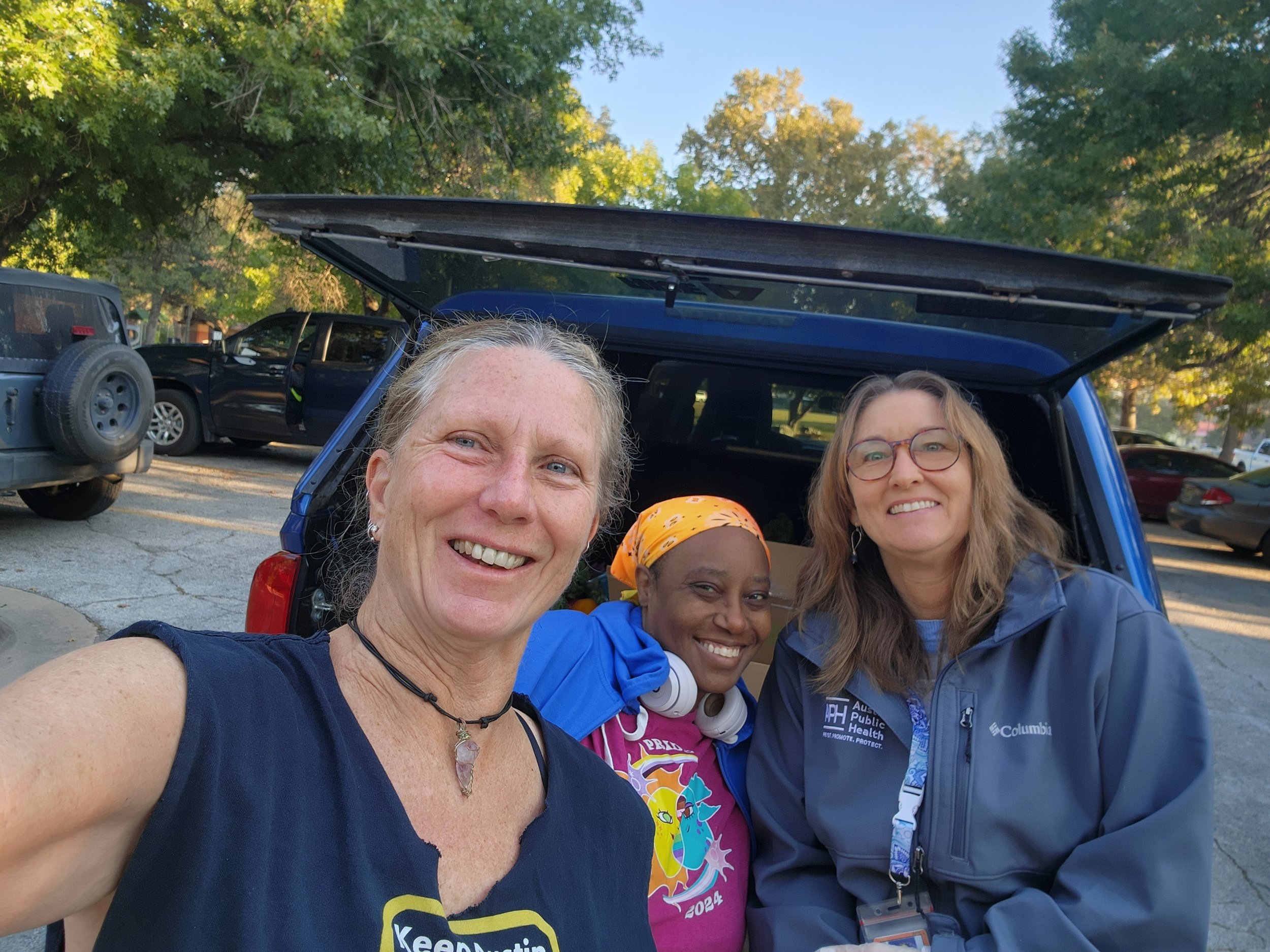
November 2025- Keep Austin Fed volunteer Victoria Pennock delivers food to South Austin Neighborhood Center.
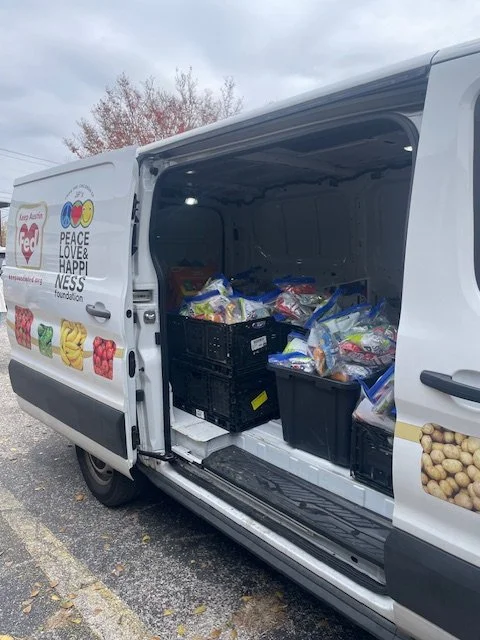
December 2025- Keep Austin Fed’s van is filled with snack packs for local families ahead of their winter break.
In 2025, 1 in 6 Austin residents experienced hunger. While food insecurity is uniformly harmful, its causes are diverse and can vary based on location, infrastructure, and personal resources. By recognizing the sources of hunger in our community, Keep Austin Fed and our partners are able to tailor our operations to best meet the unique needs of our neighbors.
Availability
For many Austinites, nutritious food is easily accessible a short distance from home, work, or their neighborhood center. Unfortunately, however, this is not the reality for everyone. Food apartheid, defined by Project Regeneration as a system of segregation that divides those with access to an abundance of nutritious food and those who have been denied that access due to systematic injustice, has created neighborhoods that require residents to leave their communities just to buy groceries.
In a 2022 study by The Civics Lab, an advocacy group from St. Edward’s University, researchers found 33 unique food apartheid areas within the City of Austin. Our neighbors living in food deserts are forced to travel longer distances to purchase groceries or rely on restaurants and convenience stores for their nutritional needs.
Each week, Keep Austin Fed hosts community giveaways in 10 different locations across Austin. By targeting neighborhoods with higher rates of food insecurity, Keep Austin Fed is able to increase the amount of fresh food available in some of Austin’s food deserts and reduce the distance community members need to travel for groceries.
Lack of transportation
Even if nutritious food is available close by, it can still be out of reach without access to reliable transportation. Without transportation, our neighbors struggle to consistently purchase groceries or access food assistance from organizations like Keep Austin Fed.
In Austin, 72% of residents drive a car as their primary means of transportation. But repair costs, insurance rates, and gas prices can make a personal vehicle inaccessible. When available, public transportation provides an affordable alternative. However, riders can only transport a limited amount of food at a time, and long wait times and service gaps leave some Austinites entirely without access to food.
Keep Austin Fed staff members and volunteers work 365 days a year to bridge the gap between local nonprofits and businesses with surplus food. By providing food to organizations already serving our community, Keep Austin Fed reduces the number of stops our neighbors have to make to receive food.
Health
Austinites who are chronically ill, disabled, or have mobility issues can experience functional limitations that make it hard to purchase, transport, and prepare fresh food. Mental health challenges can also make it more difficult to eat regular, healthy meals.
In Austin, there are many organizations with services tailored to support individuals with physical and mental health challenges. Twice a week, Keep Austin Fed delivers groceries and fresh pastries to Austin Clubhouse, which provides opportunity and community for adults living with mental health diagnoses. Keep Austin Fed also partners with ImagineArt to supply meals for artists with disabilities. By providing fresh food directly to organizations that serve our neighbors, Keep Austin Fed is able to reduce the barriers to consistent nutrition.
Cost of living
The rising cost of daily essentials, including rent, medicine, utilities, and childcare, is a primary driver of food insecurity. Even if Austinites have nutritious food available nearby, a reliable source of transportation, and the physical ability to purchase groceries, high prices can force our neighbors to sacrifice nutrition to afford other essentials.
According to the 2025 Austin-Travis County Community Health Assessment, Austin’s cost of living has “risen sharply in recent years, outpacing both wage growth and inflation.” Additionally, one in three households in Travis County earns below the local cost of living.
Luckily, Austinites have a variety of resources available to access essential nutrition. The City of Austin and Travis County both provide services, including weekly food pantries, at their Neighborhood and Community Centers. Nonprofits, including Keep Austin Fed, bring snacks, prepared meals, and groceries to housing complexes, shelters, neighborhood centers, and food pantries. In 2025, Keep Austin Fed delivered over 868,000 meals to more than 90 distinct community partners.
School closures
For families struggling to afford groceries, school breaks can cause additional strain. Without access to free meal programs, children and their families face increased costs and difficult choices.
With 76 AISD schools providing free meals, Keep Austin Fed and our partners experience a sustained increase in demand during the summer months. To support families, Keep Austin Fed partners with schools to supply snack packs before the school breaks. Community partners like Jeremiah Program, Blackland Neighborhood Center, and El Buen Samaritano, as well as Keep Austin Fed’s own community giveaways, also provide consistent sources of nutrition for families throughout the summer.
Food insecurity, no matter the cause, creates adverse health outcomes for our neighbors. While 1 in 6 Austinites experience hunger, Austin sends 1.24 million pounds of food to the landfill every day. By reducing food waste and meeting the unique needs of our neighbors, Keep Austin Fed is committed to fighting hunger in our community and working toward a future where everyone has consistent access to nutritious food.
Learn more about Keep Austin Fed’s community partners and impact.